Reading Time: 2 Minutes
Quick Answer
Yes—but not in the way most people think.
Severe physical or emotional stress can trigger temporary hair shedding in some people. However, stress alone is not considered the primary cause of male or female pattern baldness, which is mainly driven by genetics and DHT sensitivity.
Why Do People Believe This?
Many people notice increased hair shedding after exams, illness, surgery, childbirth, or a stressful life event. Because the shedding starts after stress, they assume all hair loss is caused by stress.
In reality, different types of hair loss have different causes.
Hair Science Simplified
- Think of Autumn
- Every year, trees naturally shed leaves before growing new ones.
- Similarly, after a major physical or emotional stress, more hairs may enter the resting phase at the same time and shed together.
- This is often temporary, and new hair usually begins growing once the trigger has resolved.
- Stress can increase temporary shedding—but it doesn’t change your genetics.
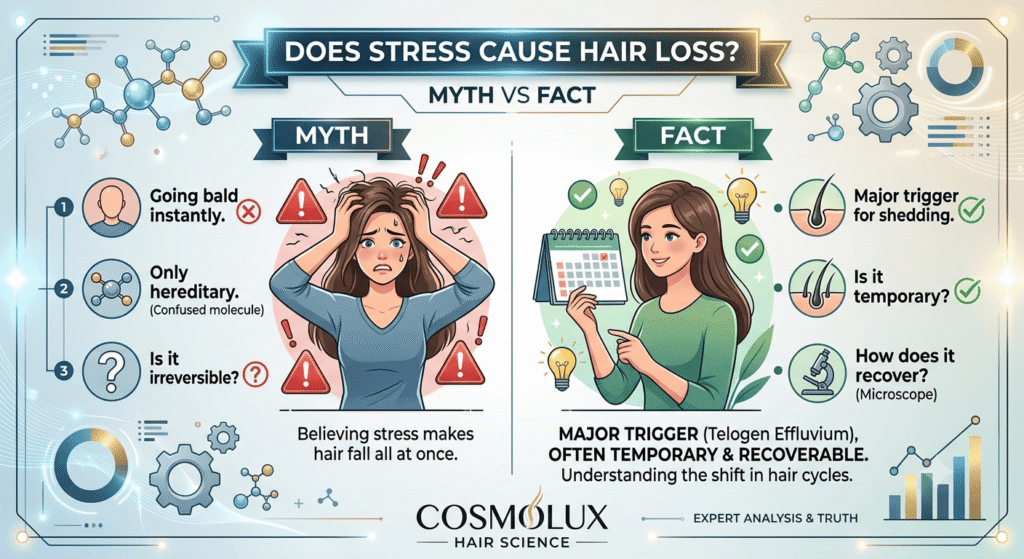
Myth vs Fact
- Myth: Stress is the main cause of male pattern baldness.
- Fact: The most common cause is genetics and DHT sensitivity.
- Myth: Every stressful day causes permanent hair loss.
- Fact: Everyday stress is not known to permanently damage hair follicles in most people.
- Myth: All hair loss caused by stress is permanent.
- Fact: Stress-related shedding is often temporary when the underlying trigger resolves.
CosmoLux Clinical Insight
Many patients tell us,
“Doctor, I think stress caused all my hair loss.”
While stress can contribute to temporary shedding, we frequently find that progressive thinning is due to androgenetic alopecia, which may simply become more noticeable during stressful periods.
Remember This
- Stress may trigger temporary shedding.
- Genetics determine pattern baldness.
Frequently Asked Questions
Can stress cause hair to fall out?
Yes. Significant physical or emotional stress can trigger temporary hair shedding in some individuals.
Will my hair grow back?
If the shedding is stress-related and the trigger has resolved, hair often regrows over time. Persistent or progressive thinning should be evaluated to identify the underlying cause.
Can reducing stress cure genetic hair loss?
Reducing stress is beneficial for overall health, but it does not change the genetic process behind androgenetic alopecia.
The CosmoLux Perspective
Managing stress is important for your overall well-being and may help reduce temporary shedding in some situations. However, if your hair is becoming progressively thinner over months or years, it’s important to look beyond stress and identify the real cause.
Stress can affect your hair cycle—but it doesn’t rewrite your genetics.