Reading Time: 2 Minutes
Quick Answer
Not directly.
Sleeping late by itself is not considered a direct cause of male or female pattern hair loss. However, poor sleep over long periods can affect overall health and may contribute to temporary hair shedding in some individuals.
The most common cause of progressive hair loss remains genetics and DHT sensitivity.
Why Do People Believe This?
Many students, doctors, professionals, and shift workers notice hair thinning during busy periods with poor sleep. Because these events happen together, people often assume:
“My late nights caused my hair loss.”
In reality, the underlying genetic process often continues regardless of sleeping habits.
Hair Science Simplified
- Think of a Car
- Missing one oil change won’t destroy an engine overnight.
- But long-term poor maintenance affects overall performance.
- Similarly, occasional late nights are unlikely to determine whether you develop genetic hair loss.
- Your hair follicles are primarily influenced by genetics, hormones, nutrition, and overall health.
- Poor sleep may affect overall health—but it doesn’t rewrite your genetics.
Myth vs Fact
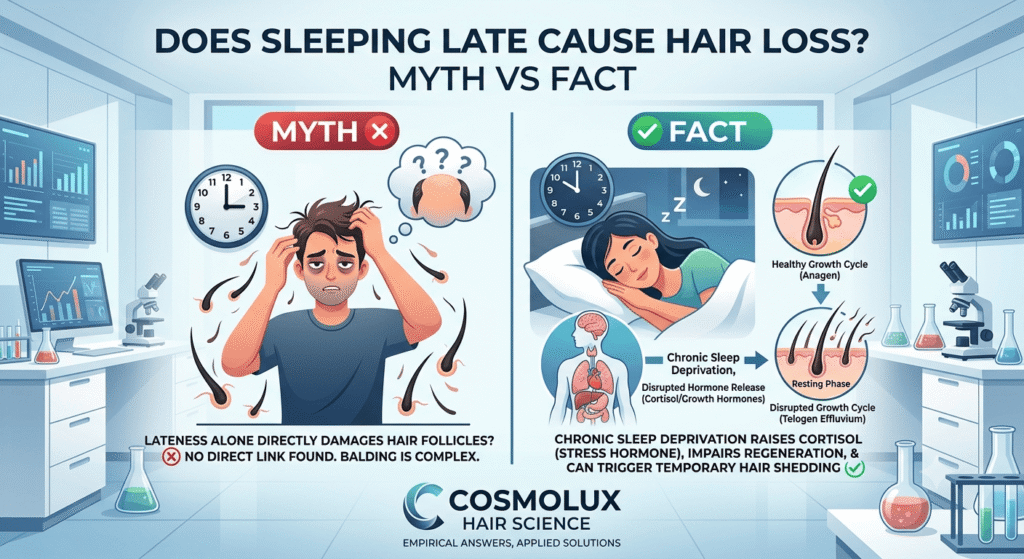
- Myth: Sleeping late causes male pattern baldness.
- Fact: The most common cause of progressive hair loss is genetics and DHT sensitivity.
- Myth: One week of poor sleep causes permanent hair loss.
- Fact: Short-term sleep loss is not known to cause permanent baldness.
- Myth: Sleeping more can reverse genetic hair loss.
- Fact: Good sleep supports overall health but is not a treatment for androgenetic alopecia.
CosmoLux Clinical Insight
Many patients tell us,
“Doctor, ever since I started sleeping late, my hair has been falling.”
Poor sleep can certainly affect your overall well-being and, in some people, contribute to temporary hair shedding. However, if hair thinning is gradually progressing over months or years, the underlying cause is often genetic hair loss, not sleep alone.
Remember This
- Good sleep supports healthy body function.
- Genetics determine the most common form of permanent hair loss.
Frequently Asked Questions
Can lack of sleep cause hair fall?
Long-term poor sleep may contribute to temporary shedding in some people, but it is not considered a primary cause of genetic hair loss.
Will sleeping 8 hours regrow my hair?
Good sleep is important for overall health, but it does not reverse genetic hair loss.
Should I improve my sleep if I’m losing hair?
Yes. Healthy sleep benefits your overall health and may support normal hair cycling, but persistent hair thinning should still be properly evaluated.
The CosmoLux Perspective
Good sleep is an important part of a healthy lifestyle, but it should not be blamed for every case of hair loss. If your hair is progressively becoming thinner, identifying the underlying cause is far more important than focusing on sleep alone.
Healthy sleep supports healthy living—but genetics remain the main driver of pattern hair loss.