Reading Time: 2 Minutes
Quick Answer
Usually, no. Hair dye does not cause genetic hair loss.
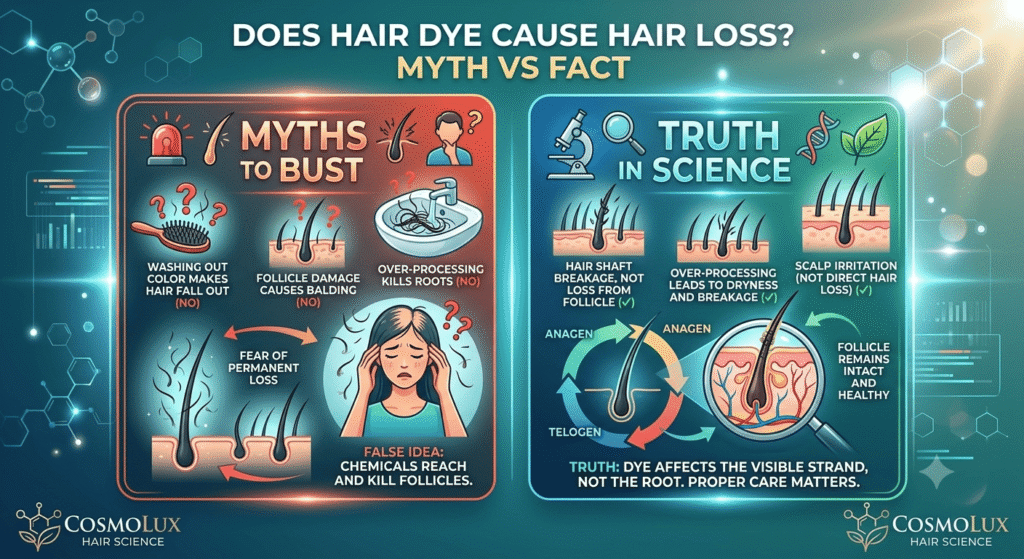
Hair coloring mainly affects the hair shaft, which is already dead tissue.
However, frequent use of harsh chemicals, repeated bleaching, allergic reactions, or chemical burns can damage the hair shaft and, in severe cases, affect the scalp and hair follicles.
This is different from genetic hair loss, which is caused primarily by genetics and DHT sensitivity.
Why Do People Believe This?
Many people notice increased hair shedding after coloring their hair.
They immediately blame the dye.
In reality, there are three different possibilities:
- Hair breakage caused by chemical damage.
- Temporary shedding due to scalp irritation.
- Ongoing genetic hair loss that was already developing.
These conditions are often confused with one another.
Hair Science Simplified
- Think of Painting a Wall
- Painting a wall changes its colour.
- It doesn’t change the bricks behind it.
- Hair dye works in a similar way.
It changes the colour of the hair shaft, not the genetic behaviour of the hair follicle. However, repeated harsh chemical treatments can weaken the hair shaft, making it dry, brittle, and more likely to break.
Hair dye changes hair colour—not your genetics.
Myth vs Fact
- Myth: Hair dye causes male pattern baldness.
- Fact: The most common cause of progressive hair loss is genetics and DHT sensitivity.
- Myth: Every hair that falls after colouring is permanently lost.
- Fact: Hair dye may increase hair breakage or temporary shedding if it irritates the scalp, but it does not usually cause genetic hair loss.
- Myth: Hair colouring damages every hair follicle.
- Fact: Most colouring products affect the hair shaft. Severe allergic reactions or chemical burns are uncommon but can affect the scalp and should be treated promptly.
CosmoLux Clinical Insight
Many patients tell us,
“Doctor, my hair started falling after colouring it.”
In our experience, most cases involve hair shaft damage or breakage, not permanent follicle damage. However, repeated bleaching, strong chemical treatments, or severe scalp reactions can occasionally affect the scalp and should never be ignored. If hair thinning continues for months, the underlying cause should be evaluated rather than assuming the dye is responsible.
Remember This
- Hair dye changes the colour of your hair—not the genetics of your hair follicles.
- Harsh chemicals can damage the hair shaft and, in severe cases, irritate the scalp, but this is different from genetic hair loss.
Frequently Asked Questions
Can hair dye make hair fall?
Hair dye can make hair more fragile or cause temporary shedding if it irritates the scalp, but it is not considered a common cause of genetic hair loss.
Is bleaching more damaging than colouring?
Yes. Bleaching is generally more damaging because it removes natural pigment and can weaken the hair shaft more than standard colouring.
Should I stop colouring my hair?
Not necessarily. Using quality products, following instructions, and avoiding excessive chemical treatments can help reduce hair damage.
The CosmoLux Perspective
Hair colouring is a cosmetic procedure, not a cause of genetic hair loss. The key is to distinguish hair breakage, chemical damage, and progressive genetic thinning, because each requires a different approach.
Healthy colouring protects the hair shaft. Healthy follicles depend on healthy biology.